Winter bedtime stories may focus on a changing landscape, a familiar place indoors or a character noticing the season. Snow is one possibility, not the definition of winter everywhere. Choose the story’s actual setting and events rather than assuming a seasonal cover means a gentle read.
Notice what winter changes
The artwork might show different light, clothing, shapes or activity. Look for those details as part of the story. A seasonal setting becomes more distinctive when it affects what the character notices or does.
If your family experiences a different kind of winter, you can enjoy the pictured place without treating it as universal.
Inspect the indoor-outdoor contrast
A warm room can provide a clear visual contrast with outside weather. Check whether the character chooses to observe or faces difficulty finding shelter. Those plots have different emotional demands.
Preview cold-related danger, being lost and separation. A reassuring ending does not necessarily make the middle suitable for every reader.
Separate season from celebration
Some winter books centre on a particular holiday; others do not. Inspect the actual content before selecting a general seasonal story. Different family traditions can be shared without assuming the child observes all of them.
Read the language aloud too. Long descriptions or unfamiliar seasonal words may invite more explanation than you want that evening.
Consider a contained snowy setting
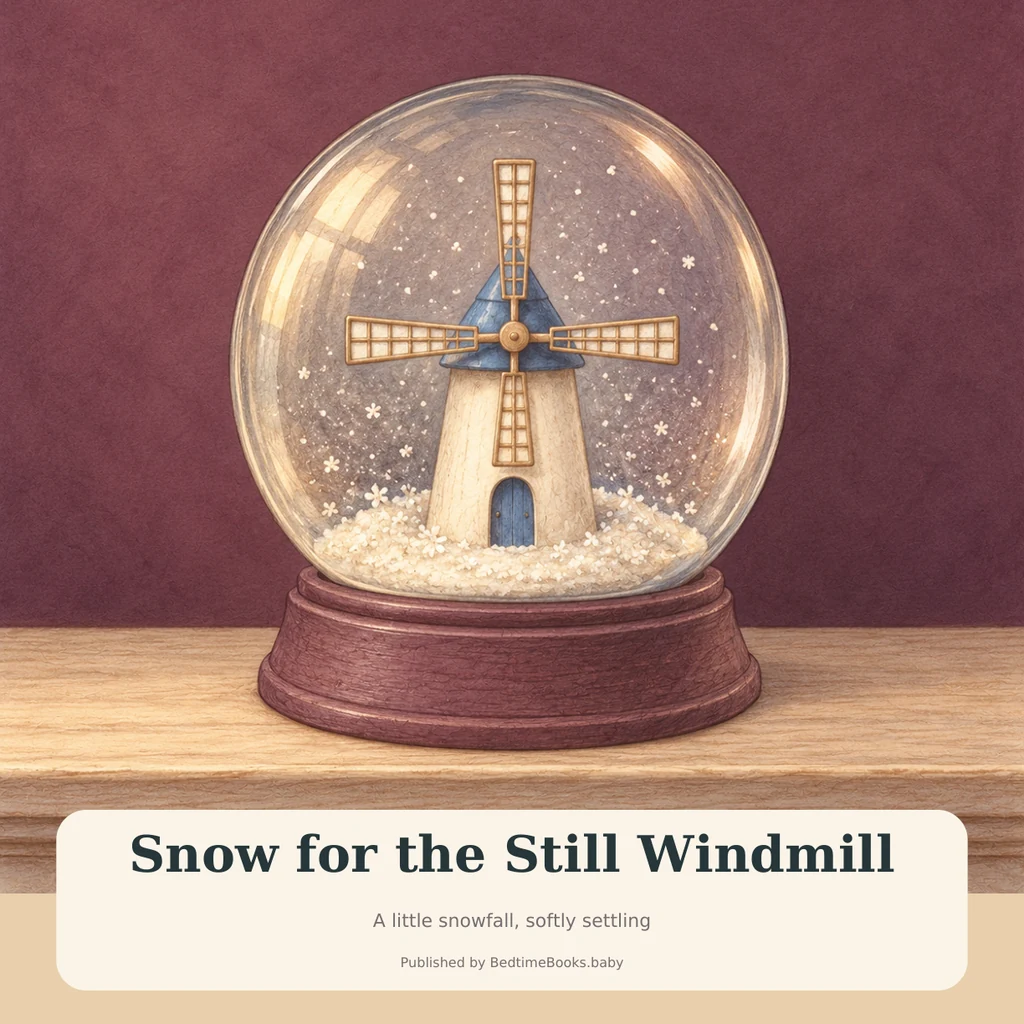
Snow for the Still Windmill takes place inside a glass globe, where flakes settle around a windmill. It is a verified snow-themed example, not an account of a child travelling through winter weather. Check the preview, age guidance and current availability.
For a related focus on descriptive atmosphere, see nature sounds and descriptions. The nature bedtime stories guide compares seasons with landscapes and skies. Choose a winter book for its particular story, while leaving factual weather and safety explanations to appropriate sources.
Compare outdoor action and indoor observation
A character watching weather through a window has a different experience from one travelling through it. Read what the season changes in the plot, not just the colours of the illustrations.
If the story involves finding shelter or returning home, preview the uncertainty. A warm final room may resolve the event while leaving a demanding middle. Another winter book may offer lower stakes through close observation or a modest task.
Let different traditions remain specific
A seasonal celebration can be part of the setting without representing every family’s winter. Name the occasion accurately when the book provides it. Do not imply that all winter stories are holiday stories or that everyone marks the same events.
If a child asks about an unfamiliar object or practice, explain what you know briefly and check uncertain details later. The story need not become an exhaustive cultural account.
Keep reading-time estimates flexible, especially when seasonal artwork invites close looking. A short text may include many details to explore. Choose whether that browsing fits tonight, or share the book earlier when conversation can expand. The seasonal theme can remain available across different reading occasions rather than being restricted to one exact date or weather condition.
Compare seasonal story choices
| Emphasis | What the story may offer | What to preview |
|---|---|---|
| Observation | Light, shapes and small changes | Whether descriptions remain clear aloud |
| Outdoor activity | A connected sequence | Cold-related danger or an uncertain return |
| A celebration | A particular family or community occasion | The actual tradition and emotional events |
These are browsing distinctions, not a claim that every winter falls into the same pattern. A contained imaginary scene, such as a glass globe, differs from weather experienced outdoors. Describe that difference accurately. The child may connect the scene with their own season or simply enjoy an unfamiliar place. Neither response needs a follow-up activity. Keep factual explanations and practical weather guidance separate from fictional events, and choose the complete emotional route rather than only the seasonal cover artwork.