Nature sounds and descriptions can make a picture-book setting specific. A rustle, a distant call or changing light gives the reader something to notice. Choose language that contributes to the story and feels comfortable aloud, rather than assuming a collection of soft-sounding words is automatically effective.
Ask what a sound does
A sound may draw a character’s attention, mark a repeated action or distinguish one place from another. It should have a role beyond decorating the sentence.
Written sound words can invite participation. Read them naturally first, then decide whether extra effects add pleasure or distract from the scene.
Keep descriptions concrete
Specific details are easier to share than a long chain of vague adjectives. Notice whether the text tells you what has changed or where the character is looking.
The pictures can provide much of the visible information. Words may add something not immediately pictured, such as a distant sound or a character’s observation.
Allow the child’s noticing
A child may find a different detail interesting. Pause briefly to look rather than insisting on the sound or image you planned to emphasise. You do not need a question for every spread.
Read clearly at a comfortable volume. A nature-themed text does not require whispering or artificially lengthening every phrase.
Use an actual listening example
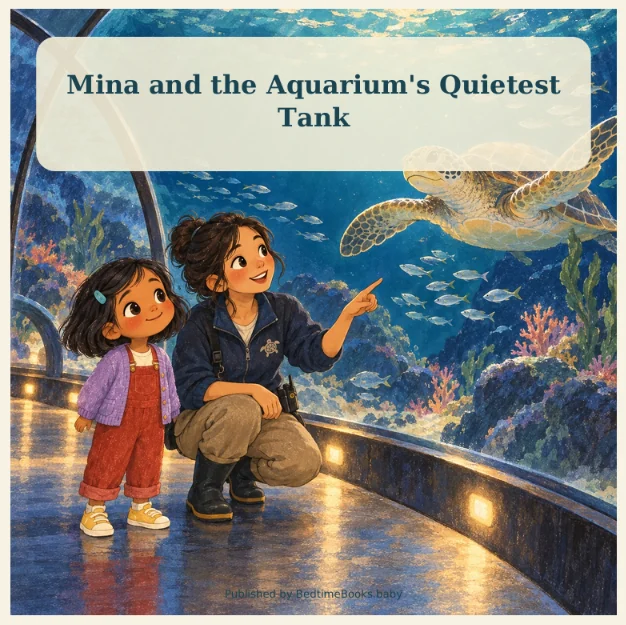
Mina and the Aquarium’s Quietest Tank is described as Mina and keeper Jo listening after the aquarium closes. Its setting includes an enclosed human-managed place, so do not relabel it a story of sounds in the open ocean. Check the preview and age guidance.
For weather-led sound patterns, compare rainy night stories. The nature bedtime stories guide connects language with setting and plot. Choose descriptions because they make a particular book worth sharing, without claiming nature sounds in a story will ensure sleep or change a child’s emotions.
Compare what is heard and what is pictured
A sound can imply something outside the frame. Notice whether the text makes that source clear or leaves it uncertain. A distant call may create atmosphere, while an unexplained noise may create suspense. The distinction matters when you want a low-tension reading.
Descriptions can also guide attention through an image. Read whether the words point toward one meaningful detail or compete with many other details. Clear language leaves room for the artwork.
Choose your performance deliberately
Try a passage once without extra effects. Then decide whether a modest sound or pause adds something. You do not have to reproduce every noise named in the story.
If the child supplies a sound, welcome it within the amount of activity you can offer. A single contribution need not become an expectation on every later page.
When the wording is familiar, resist rushing past the illustrations from memory. Repeated reading can make it easier to notice something new, but there is no obligation to find a fresh detail every time. The descriptive passage can simply remain pleasant to hear. Choose language worth revisiting in your own voice, with factual questions kept separate from the book’s imaginative choices.
A language comparison
| Device | Useful contribution | Check before choosing |
|---|---|---|
| A sound word | Rhythm or a character’s attention | Does repetition escalate into a larger performance? |
| A concrete description | A specific place or change | Can you follow the meaning in your own voice? |
| A recurring image | Connection across the pages | Does the final return add meaning? |
Use this comparison privately when browsing, rather than turning every reading into analysis. During sharing, the child can listen, look or make a brief observation. You do not need to name the literary device. Choose wording you enjoy returning to and leave room for the artwork. A precise recommendation describes those features, while avoiding claims that a written sound or descriptive passage will produce a particular sleep or emotional outcome.