Ocean animal stories can follow a creature’s movement, a small encounter or a return to a familiar place underwater. Look for a clear viewpoint and illustrations that make the action readable. A blue palette alone does not tell you whether the story is gentle.
Find the focal creature
Underwater scenes can contain many small details. Check whether the main animal remains easy to identify and whether the pictures show where it moves. A simple route can help a younger listener follow the story.
If several species appear, notice whether each has a narrative role or merely fills the background. You do not need to name every creature to enjoy the page.
Inspect scale and movement
A large shadow, sudden current or pursuit can change the emotional tone. Preview the full sequence, especially when the cover suggests a quiet sea but the plot depends on danger.
Gentle movement can still be interesting through changing light, nearby objects and the character’s attention. The story need not add a threat to have direction.
Separate the animal from the scenery
An ocean-animal guide focuses on a creature’s role and actions. An ocean-setting story may instead centre on waves, a shore or a human viewpoint. Both can be enjoyable, but they answer different reading interests.
For another species-led setting, see bird bedtime stories.
Explore a verified original
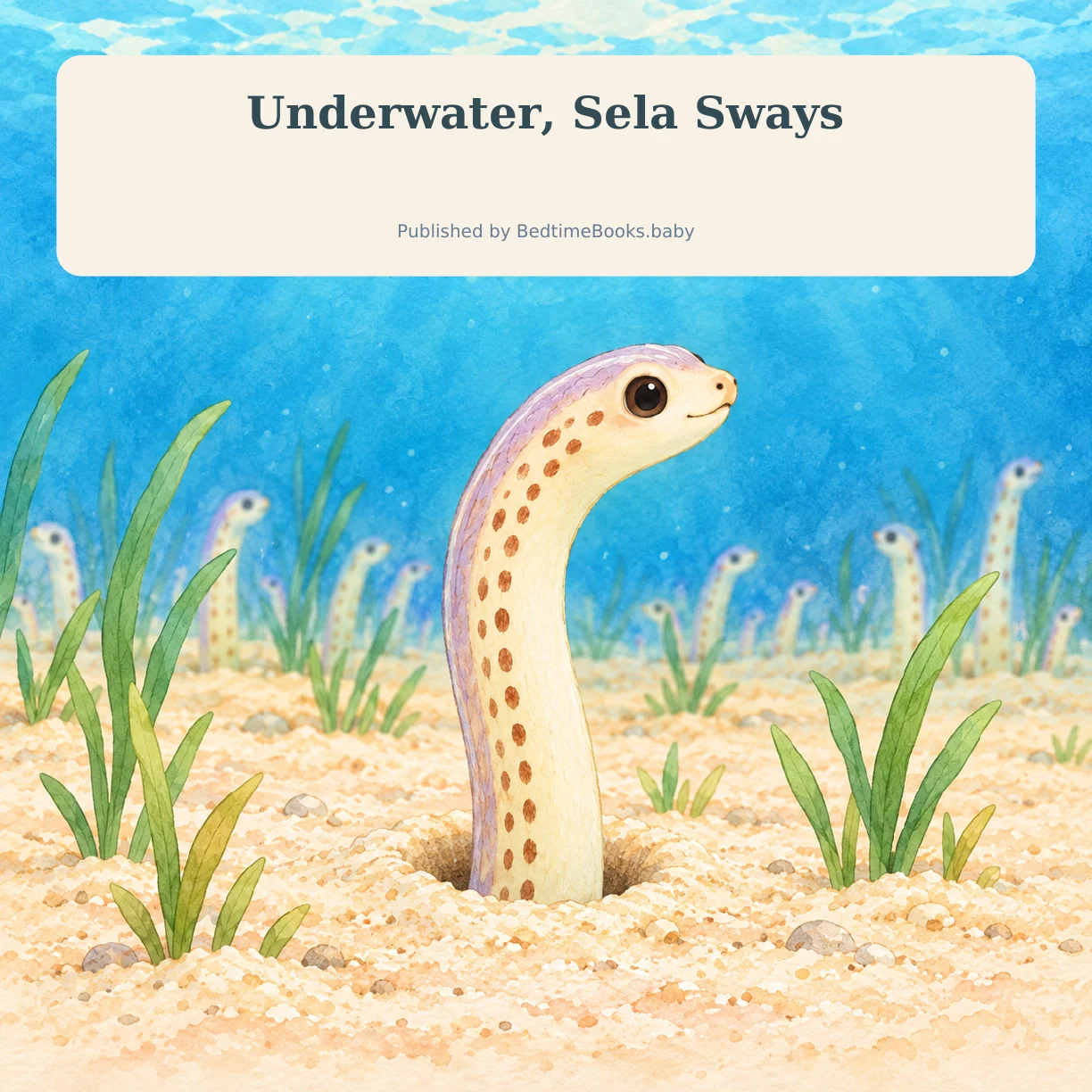
Underwater, Sela Sways follows Sela, a spotted garden eel, above her sandy tunnel before she lowers into rest. The recorded age guidance is 2 to 3 and the approximate reading time is three minutes. Check the preview and availability on the book page.
That description does not make the book a marine reference work. Explain invented speech or behaviour as part of the story when needed. The animal bedtime stories guide helps compare character, setting and tone across different animal books.
Follow one creature through a spread
Look for a stable visual feature that makes the main character recognisable when its position changes. A patterned body, clear silhouette or consistent scale can help. Crowded underwater scenes may invite searching instead of following the text.
Neither layout is inherently better. Choose whether you want close browsing or a continuous narrative, and allow enough time for the book’s main attraction.
Check what the water makes possible
A creature’s movement may give the pictures a distinctive rhythm. Notice whether the story uses that movement to complete a small action or simply changes locations repeatedly. A short text can still require a listener to follow a complicated route.
If the book introduces many unfamiliar species, you need not supply facts about all of them. Name what is clear and leave uncertain questions for another reference. Fictional dialogue should not become evidence about real marine behaviour.
A verified preview can help with visual style and opening tone, but it may not reveal the full emotional path. Read a complete copy when possible, especially before recommending an unfamiliar book as low in tension. A quiet first spread and an appealing focal creature do not rule out danger later in the plot.
Compare underwater storytelling demands
| Element | A more continuous reading | A more exploratory reading |
|---|---|---|
| Focal creature | Easy to locate across spreads | Hidden among many small details |
| Movement | A clear route or repeated action | Frequent changes of viewpoint and scale |
| Language | Connected passages with a visible thread | Names, descriptions and invitations to search |
These columns describe possible reading experiences, not better and worse books. A child may enjoy both. Decide whether you have time to inspect the scene closely or want to follow a compact narrative. If a question about an unfamiliar species arises, you can note it for later rather than supplying an uncertain fact. The story’s imaginative behaviour remains part of its fiction. Accurate recommendations should identify that particular viewpoint and structure, while preserving the book’s actual age guidance and product information.