Bird bedtime stories can offer a distinctive view of height, distance and movement. Some follow a small journey; others stay close to one place or group. Look at how the pictures orient the reader and how the story brings its movement to an end.
Notice the viewpoint
A view from a branch creates a different experience from looking across open water or following a flight. Check whether the changes of perspective remain understandable, especially for a younger listener.
A tiny bird in a large sky may suggest freedom, vulnerability or wonder. The surrounding events determine which feeling the story develops.
Read the social pattern
A book may focus on one bird, a pair or a flock. A group scene is easier to follow when the focal character remains visually distinct. Notice whether the narrative depends on finding someone or returning to a group.
Preview separation and predator scenes. A nest on the cover does not guarantee low stakes.
Avoid assuming one bedtime for every bird
Fictional birds may follow a human-style goodnight routine. Enjoy that as make-believe rather than treating it as a universal wildlife fact. If the child asks about a species, use a separate reliable nature reference.
You can also choose stories that focus on a visible action without explaining animal behaviour.
Explore a recorded example
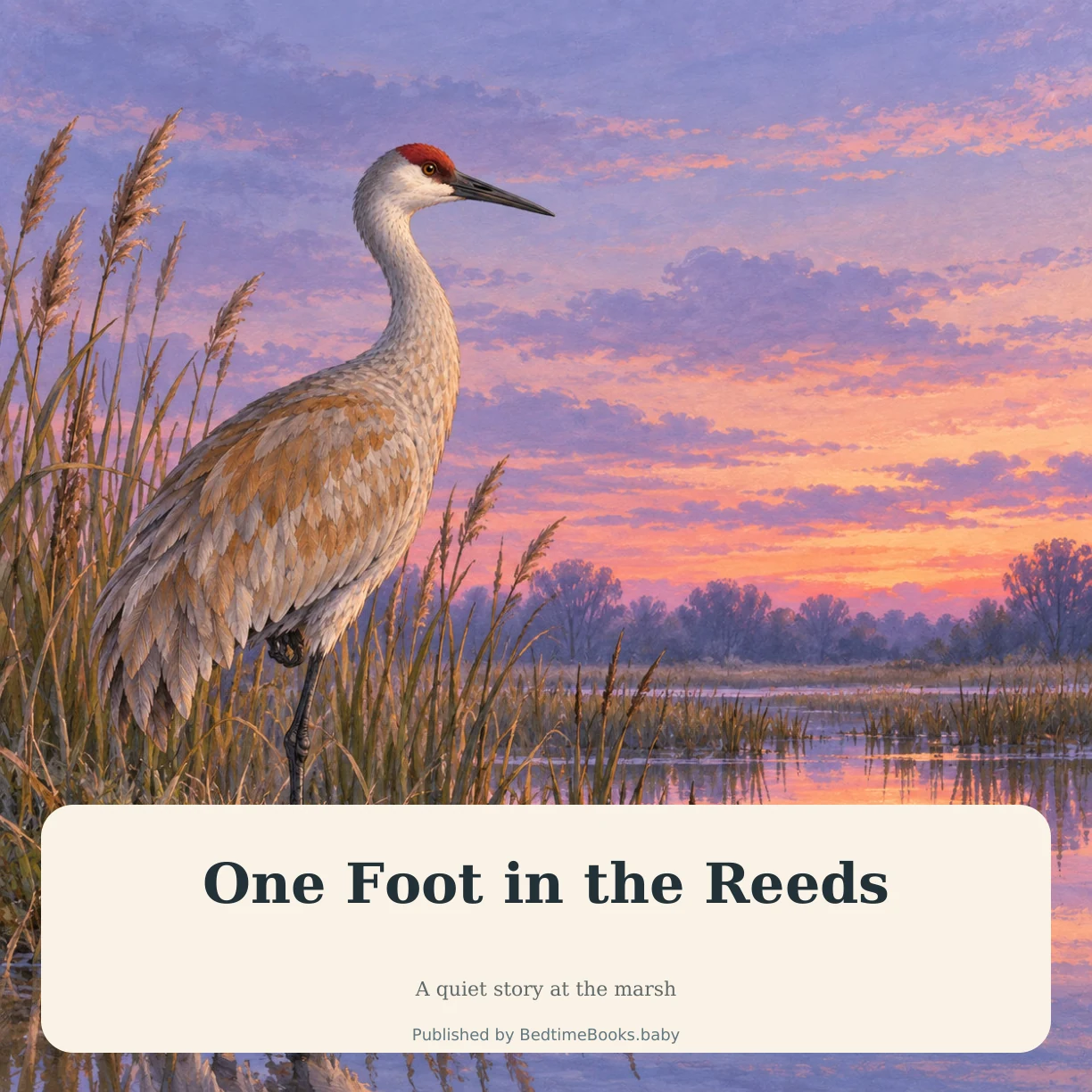
One Foot in the Reeds follows Kes the crane making a small ripple at the marsh edge before finding a steady place to rest as light fades. Check the book’s preview, age guidance and availability. Do not infer a larger migration or nesting plot from that description.
Compare ocean animal stories for another setting where viewpoint and movement shape the experience. The animal bedtime guide connects those features with age and read-aloud choice. Choose a bird story for its particular character and place, without assuming that wings alone make a gentle adventure.
Compare flight with still observation
A flight sequence may move rapidly across several settings. Check whether recurring landmarks or clear transitions help the listener follow it. A book that remains beside one bird can instead develop through posture, sound or changing light.
Try reading a passage from each kind aloud. The first may rely on action words and a sense of movement; the second may depend more on precise description. Choose through the actual language rather than assuming all bird books offer the same atmosphere.
Notice the group without testing identification
A flock scene can contain interesting patterns even when the child cannot distinguish every bird. You can describe the focal action and let the rest remain visual detail. Avoid turning the page into a naming exercise unless that is what the child wants.
If the story depends on one bird being missing, preview how the uncertainty develops and resolves. A reunion may be warm while the search is still demanding.
Keep animal facts separate from invented relationships. A fictional family arrangement can serve the story without representing every species. When a factual question arises, answer what you know and check uncertain details later. The reading can continue without an improvised nature lesson.
Bird-story choices to compare
| Focus | What to inspect | Why it matters for sharing |
|---|---|---|
| A journey | Clear transitions between locations | The listener can follow movement without repeated reconstruction |
| One resting place | Small changes in posture, light or company | The scene can develop while remaining in one setting |
| A group | A visually distinct focal character | Background birds need not all become names to remember |
A book can combine these approaches, so read the whole sequence rather than choosing from one spread. If the final image returns to an opening landmark, leave time to notice that connection. You need not explain it as a lesson. A child may simply enjoy seeing the familiar place again. Keep questions about real bird behaviour separate from the story’s invented family or routine, and verify any factual recommendation before presenting it as nature information.