Rainy night stories can build atmosphere through repeated sounds, reflections and the contrast between a room and the weather outside. Look at whether rain is background, a character or the cause of a problem. Those roles lead to very different readings.
Listen to the rain in the text
A repeated sound can give a page rhythm. Try it aloud in your ordinary voice before deciding how much extra sound effect to add. A soft refrain and a dramatic thunderclap are different performance choices.
If the child enjoys joining in, leave room for it without requiring a response each time.
Look at shelter and viewpoint
A story viewed through a window may focus on noticing. A character caught outside may create urgency. Check what remains uncertain and how long the uncertainty lasts.
Read the pictures for rising water, isolation or threatening shadows. A friendly description does not reveal every emotional demand.
Distinguish rain from storms
A rain-themed book may include thunder, lightning or damage. Preview the middle and ending, especially when you want a low-tension choice. A first reading earlier can help you gauge the child’s response.
Do not insist a story must feel comforting because rain sounds are described as soothing elsewhere. Responses are individual.
Explore a related original
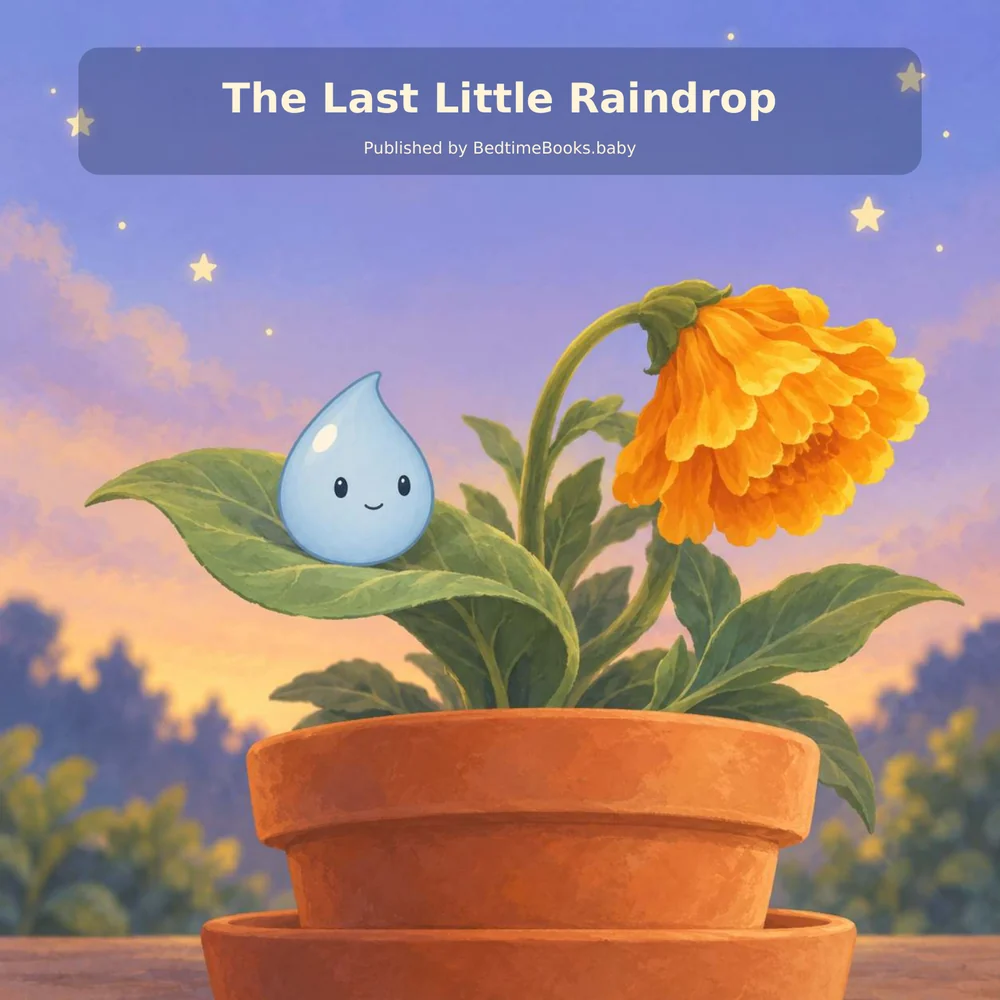
The Last Little Raindrop begins after rain has gone to bed, with Pip still on a roof. Its description follows a quiet garden journey toward rest. That makes it a related raindrop story, rather than a verified account of a family listening to rain indoors.
Check its preview, ages 2 to 3 guidance and approximate four-minute reading time. The book page carries current availability.
For another way weather becomes imaginative material, see cloud bedtime stories. The nature bedtime reading guide connects weather with landscape and language. Choose the specific rain story you want to share without promising that its sounds will produce sleep.
Compare the indoor and outdoor reader positions
From inside a room, the rain may be something to watch or hear. From the viewpoint of a small character outdoors, it may affect movement and shelter. The same weather can therefore create a descriptive book or an adventure.
Look at whether the pictures establish the character’s position clearly. A listener should not need repeated explanations about who is protected and who is still searching.
Choose how sound enters the reading
A written tapping pattern may be comfortable in your ordinary voice. Try it before adding finger taps or large sound effects. Extra performance can change a gentle passage into a game.
If the child enjoys the game, give it a place when that activity fits. Another rain story may suit a more continuous evening reading. There is no need to classify one as good and the other as unsuitable in general.
A familiar rain book may remain appealing even when the weather outside is different. The setting belongs to the story, and the reading does not require matching conditions. If the child makes a real-world comparison, respond to the observation without turning the book into a forecast or a factual explanation it was not written to provide.
Inspect three parts of the rain scene
| Part | Notice | Why it matters |
|---|---|---|
| Viewpoint | Indoors, outdoors or a moving raindrop | The character’s exposure changes the plot’s stakes |
| Sound | A returning phrase or an escalating noise | Delivery and participation can change the reading’s pace |
| Resolution | What becomes complete by the final page | Attractive weather imagery alone does not finish a story |
Use the whole sequence to judge the book. A preview may show the viewpoint but not a later storm. When possible, inspect a complete copy before recommending it as low in tension. A child’s response may still differ from yours. Keep a known alternative nearby and allow the selection to change without treating the first book as a failure. Its rain theme can remain enjoyable at another reading time or in another form.