Woodland animal stories draw interest from paths, trees, sheltered spaces and the creatures moving through them. For bedtime, look at how the forest is presented: a place of discovery and return, or a setting for pursuit and getting lost. The animal cast alone does not determine the tone.
Read the forest as part of the plot
A repeated landmark can make a journey understandable. A hollow, branch or clearing can become a recognisable destination. Check whether the pictures help the reader follow where the character is going.
Very dark scenes are not automatically frightening, but hidden shapes and uncertain routes may add suspense. Preview these details with your child in mind.
Distinguish the characters
A small cast with clear visual differences can be easier to share than many similarly drawn creatures. Notice what each character wants and does, rather than treating woodland animals as interchangeable decorations.
If the animals wear clothes or speak, enjoy the make-believe. Keep any explanation about real wildlife separate from the story’s invented behaviour.
Check the homecoming
Many woodland plots end in a sheltered place. Read whether that return resolves the original situation and whether the route includes tension you would rather avoid. A cosy final image does not describe the whole reading.
For another land-based setting, compare farm animal stories, whose interest may come more from shared activity than finding a route through trees.
Use catalogue examples carefully
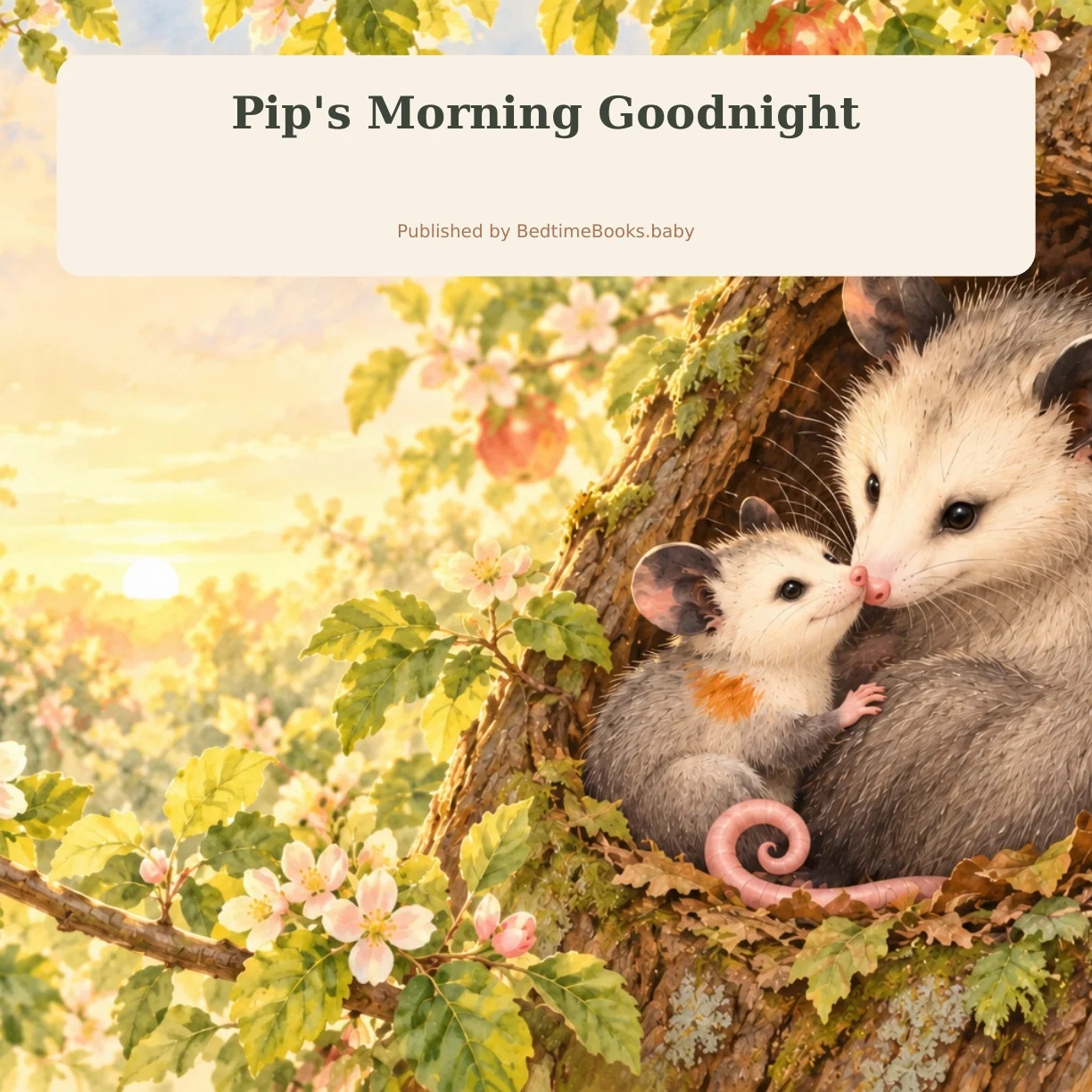
Pip’s Morning Goodnight follows a possum home to a family tree hollow at dawn in an orchard setting. It offers a related tree-home example, not evidence that every woodland story follows the same pattern. Check the preview and age guidance.
The animal bedtime stories guide compares species, setting and narrative roles. Choose a woodland book for the actual place and journey it creates, without treating fictional animal behaviour as a nature lesson.
Compare a route with a resting place
A route-based woodland story asks the listener to follow movement between landmarks. A place-based story may stay near one hollow or clearing while the character notices changes. Inspect the actual book to see which experience it offers.
For a route, check the transitions. Can you tell whether the character has moved a short distance or entered a different setting? For a place, ask what develops while the location remains stable. Small changes in light, company or attention can supply interest.
Choose a manageable cast
A forest scene may contain many creatures without making all of them characters. Notice which ones need to be remembered and whether the text introduces them clearly. You do not have to name every background animal.
If the child enjoys spotting creatures, leave time for that browsing. If you want a continuous reading, choose a layout with a clear central action rather than constantly asking the child to leave the background alone.
A book can offer both pleasures on different occasions. The useful decision is how you will share it tonight. Read its ending before beginning, and keep a shorter familiar choice available when a new woodland world would require more orientation than the evening allows.
A woodland comparison card
| Feature | Look for | Read more closely when |
|---|---|---|
| Route | Clear changes between a few recognisable places | The character’s location becomes uncertain for several spreads |
| Cast | Distinct characters with understandable roles | Several similar creatures need names remembered immediately |
| Shelter | A destination connected with the opening | A cosy final scene is the only evidence that the plot is gentle |
Use these points to compare actual copies, not to score a child. A listener may enjoy suspense, but you should know what you are offering. If the book mainly invites looking for hidden animals, give that browsing enough time or choose a more continuous narrative for the evening. A woodland setting can support both forms. The useful distinction is what the pages ask you to do together, rather than whether the cover contains trees and a sleeping animal.