Stories about everyday activities give toddlers a recognisable setting: folding something, putting toys away, visiting a shop or finishing a bath. The strongest examples turn an ordinary action into a small story through a character’s attention, a change or a satisfying sequence. They offer more than a list of tasks.
Look for a story within the routine
A beginning establishes what is happening. The middle lets the activity develop. The ending leaves something changed or complete. Even a simple book can have this shape without adding a dramatic problem.
Check whether the pictures contribute details beyond the words. A familiar room, an object moving between hands or changing evening light can make a modest action worth revisiting.
Leave room for differences between homes
An activity may be familiar without matching your household exactly. Families use different words, objects and routines. You can notice a difference without presenting one version as the correct way to live.
Avoid using the story as a disguised set of orders. If a character tidies up, the book can still be enjoyed when your own evening does not follow the same sequence.
Share recognition without constant questions
You might comment that the child has a similar cup or that the pictured towel has stripes. A brief observation can connect the page with ordinary experience. The child does not have to name every object.
For toddlers who like stable sequences, familiar-book preferences explains why rereading can remain a valid choice. A familiar routine theme need not be replaced with a more elaborate plot.
Compare actual catalogue descriptions
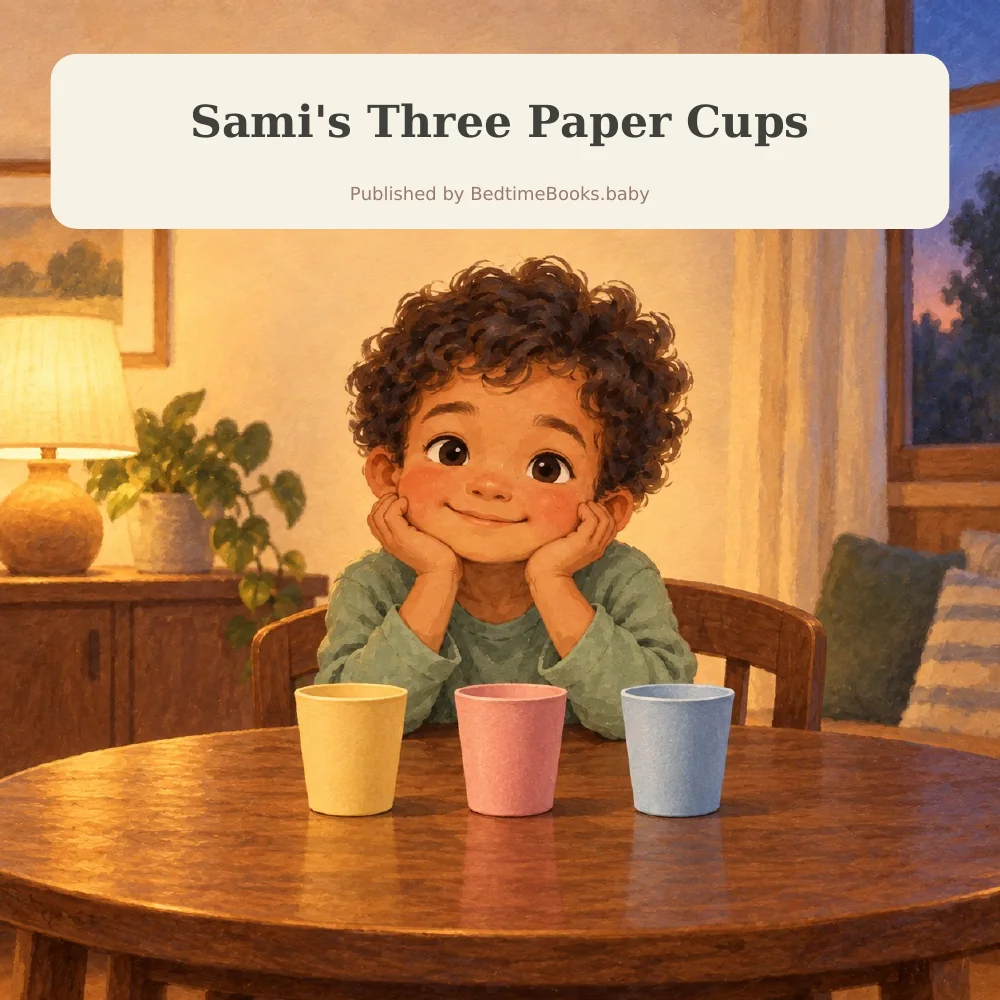
Warm from the Dryer follows a striped towel as Hadi and Mama smooth, fold and carry it home. Sami’s Three Paper Cups describes Sami making shapes before nesting the cups together. These are verified examples of ordinary actions providing a story’s focus.
Check each book’s age guidance, reading estimate and preview before selecting it. Current availability is shown on the book page. The toddler bedtime stories guide offers a wider comparison of routines, animals and imaginative stories. Choose an everyday theme because it interests the child, rather than expecting it to enforce the evening schedule.
Notice the ordinary object
Choose one object that changes position or use across the story. A towel may be folded, carried and put away; cups may be arranged and nested. Following that visible sequence can help you share the narrative without adding many explanations.
Ask what the book’s pictures make interesting about the object. Texture, colour and the way a character handles it can distinguish the story from a household checklist. There is no need to reproduce the activity immediately afterward.
If the pictured home differs from yours, describe the scene as this family’s experience. A familiar theme should make room for different households, not quietly present one routine as the correct standard.
Look at who participates
An ordinary activity can reveal a relationship. One character may show another how something works, wait nearby or share a small part of the task. Notice whether the pictures give each person a role.
Different ages and households can appear without a speech about their differences. Let the scene introduce its own arrangement. If the child compares it with home, respond to the actual observation rather than treating the pictured routine as a model everyone should follow.
Find the point of completion
A story about folding, arranging or making something often has a visible change from scattered pieces to a finished arrangement. Look at how the final spread uses that change. Does it connect with the opening, or merely announce bedtime?
A satisfying ending can leave an activity unfinished in a deliberate way, such as saving something for tomorrow. What matters is that the story makes the pause understandable.
You can enjoy this structure without asking the child to copy it immediately. If you do want to try a related activity another day, keep that invitation separate from the bedtime reading. The book should remain available as a story, rather than only appearing when the adult wants a task completed or a routine followed.
The ordinary activity can carry its own interest through precise pictures and language. Leave room to enjoy those details without immediately turning the story into another household task.