A short toddler bedtime story should offer a complete small experience without requiring hurried reading. Look for a limited cast, one main action and an ending that follows naturally from it. A brief book can still have interesting pictures and room for conversation.
Short does not mean inferior or suitable only for younger children. It can simply be the right choice for the time and energy available that evening.
Find one clear thread
A character finishes a task, explores one place or returns home. A single thread like this is easier to follow than a sequence of unrelated incidents. Check whether the ending resolves what the opening introduces.
Count reading demands rather than pages. A book with few words may include intricate illustrations that invite a long search. That may be enjoyable, but it is a different choice from a quick, continuous story.
Keep your normal pace
If the only way to finish a book is to read unusually fast, choose a shorter text. Rushing removes opportunities to look at the artwork and can make the language harder to enjoy.
You can also choose a book with distinct episodes and stop after one. For a continuous plot, find the pause beforehand so that stopping does not feel arbitrary.
Allow a little participation
One repeated phrase or a page turn can let a toddler join in without greatly extending the session. Do not add questions simply to make a short book feel more substantial. A compact story can stand on its own.
For children who enjoy patterns, see repetitive bedtime stories for toddlers. The useful pattern is one you both enjoy, not one the child is required to remember.
Compare an actual catalogue example
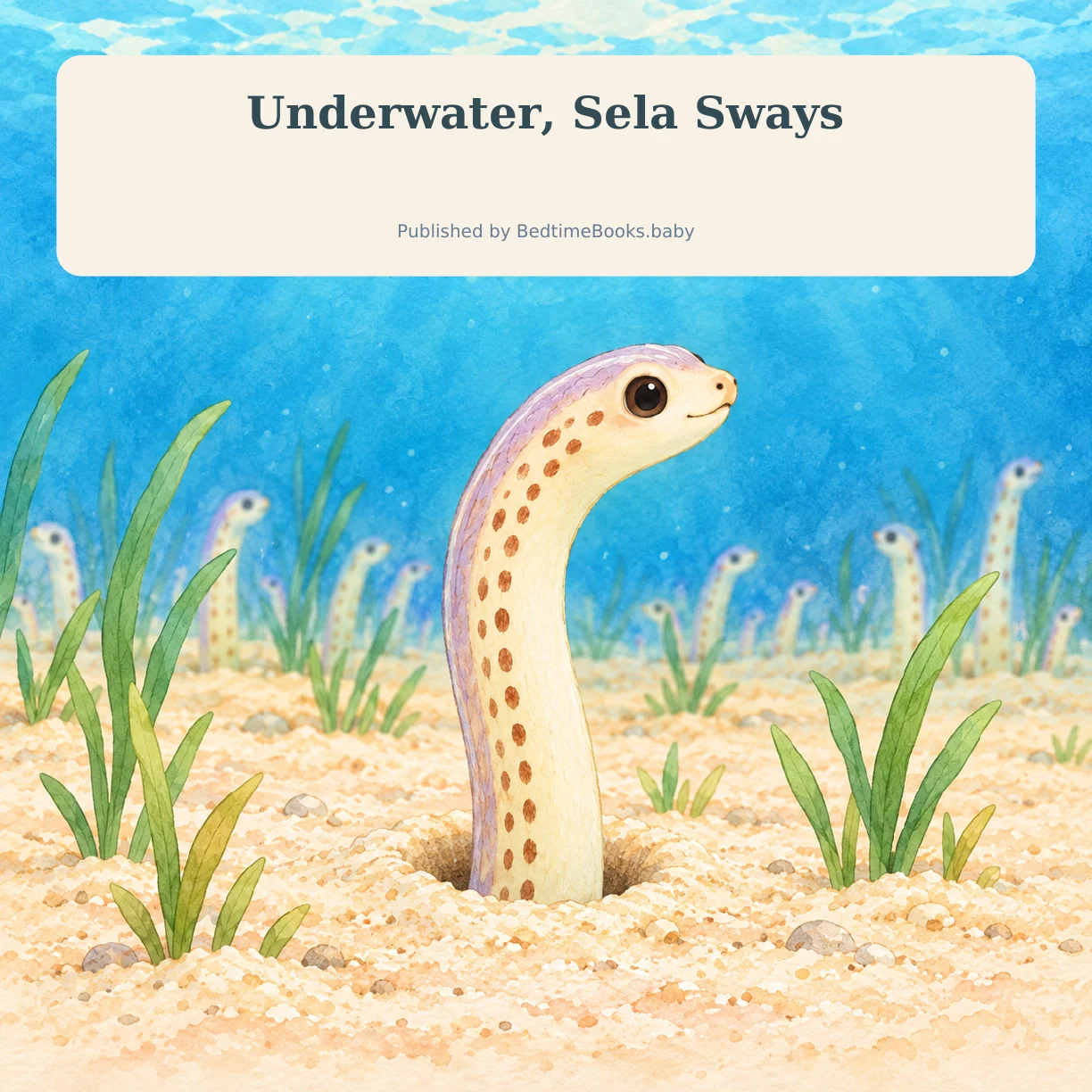
Underwater, Sela Sways has a listed reading time of approximately three minutes and age guidance of 2 to 3. Its description follows Sela, a spotted garden eel, as she lowers into her sandy tunnel while the sea grows calmer. Open the preview before deciding whether the pictures and text suit your reader.
A listed duration is an estimate, and availability belongs to the book page. For selecting beyond reading length, use the toddler bedtime story guide. Keep a short favourite ready for evenings when a larger reading plan is impractical.
Keep two kinds of brief option
One option can be a complete tiny narrative; another can be a book of independent scenes. The first offers the pleasure of reaching an ending. The second gives more flexibility when the child wants to browse or stop early.
Try both at your ordinary reading pace. Include a pause to see each picture, because a printed duration rarely captures that part. If one book consistently becomes an extended search, keep it for an evening when browsing fits rather than racing through its main attraction.
A short-book shelf need not be large. A few different structures can offer meaningful variety even when all the books are brief. Choose the particular reading experience, not simply the smallest volume.
A brief book can still have depth
Look for a relationship between the pictures and words. The text may describe one action while an expression or background detail adds another layer. A short narrative can therefore offer more on later readings without needing extra pages.
Leave those details available rather than explaining all of them at once. A child may notice a visual connection on a later evening, or enjoy the main story without commenting. The book does not need to become a lesson in looking.
When you only have time for one spread
Choose a book whose pages can stand independently, or a favourite passage you can share accurately. Explain the limited plan before beginning if the child can understand that arrangement. Avoid opening a long continuous plot and unexpectedly stopping at its most uncertain moment.
One spread can provide a small shared encounter; a complete brief story offers a different kind of resolution. Keep both options available rather than claiming they are identical experiences.
If you regularly need a shorter choice than the books on your shelf, use a library visit to compare compact narratives. Read them at your ordinary pace before selecting. The goal is a book you can enjoy within the available time, without rushing its language or repeatedly cutting away its ending.