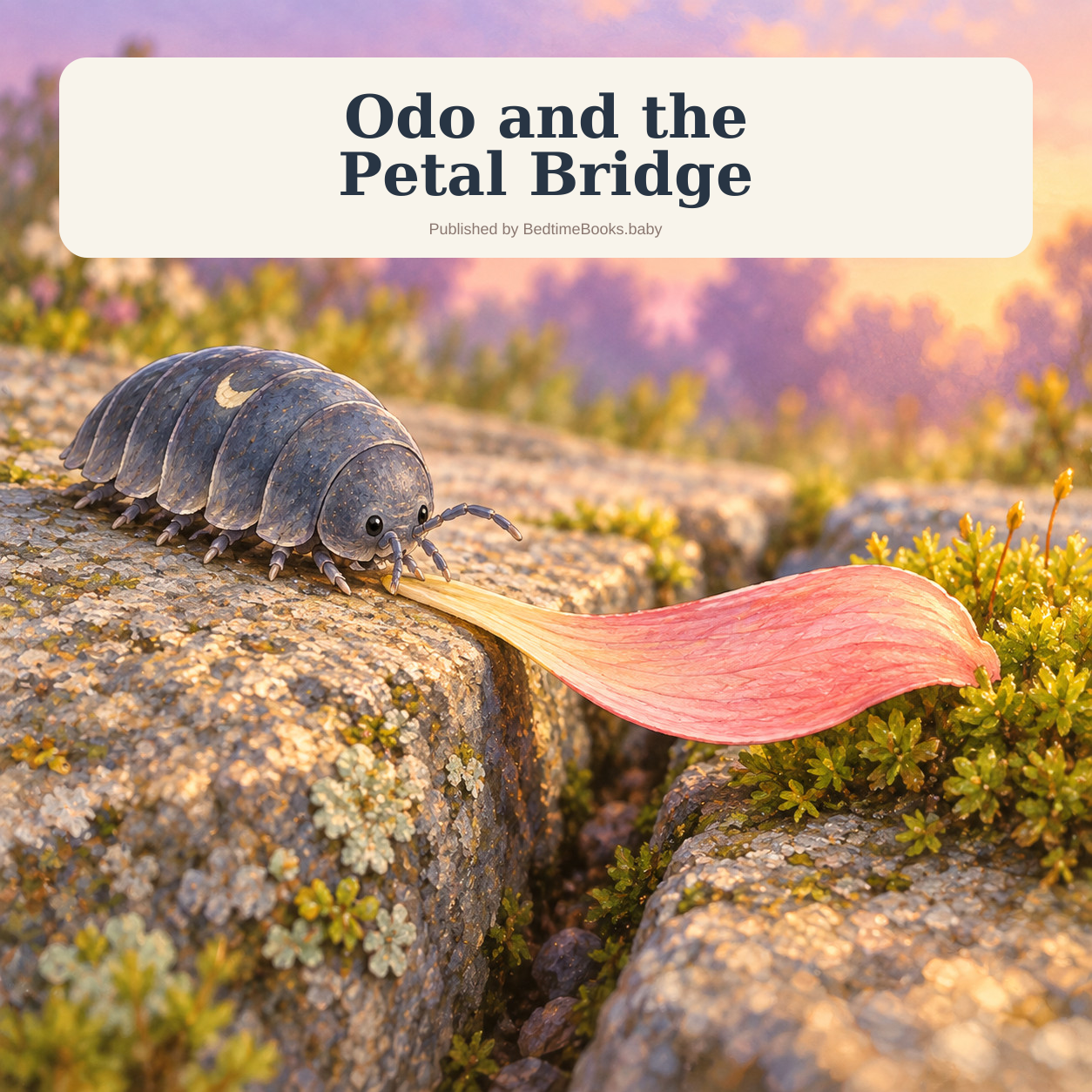
Garden bedtime stories can make a small space feel full of interest. A path, a pot, a leaf or a gap between stones can provide the centre of a story. Look for a clear viewpoint and details that change, rather than a garden used only as decorative scenery.
Read at the character’s scale
A small creature may experience a petal as something large and useful. A person may notice the same garden through colour, scent or familiar work. Check whether the illustrations keep that viewpoint understandable.
Scale can create gentle wonder without a large adventure. A modest obstacle may be enough to give the plot direction.
Look for a sequence
The story might follow a short route, a task or a change in evening light. Notice what the final spread completes. If the book mostly lists things to see, decide whether picture browsing is the experience you want.
You can enjoy a garden story without identifying every plant or insect. Questions that need factual checking can wait for another suitable source.
Check imagined nature
Talking plants and purposeful objects belong to make-believe. Keep fictional events separate from factual explanations when needed. A story is not automatically a gardening guide because it contains plants.
Preview threats to small characters, including sudden looming creatures or a difficult journey back. Attractive flowers do not guarantee low tension.
Explore a precise example
Odo and the Petal Bridge follows a small woodlouse using a peach-pink petal to cross a narrow seam between stones and reach moss. The catalogue supports that modest nature adventure. Check its preview, age guidance and availability rather than inferring additional scenes.
Compare forest stories for settings with different distances and routes. The nature bedtime guide connects place with weather, sound and seasons. Choose a garden book for the particular details its character notices, not for a promised calming effect from the setting alone.
Compare near and far views
A broad garden spread can establish a place, while a close view can make one small event important. Look at whether the transitions remain clear. A sudden change in scale may create wonder, but can also require the reader to work out where the character has gone.
Recurring objects help connect those views. A stone, pot or leaf may be recognisable even when the perspective changes. The child does not have to identify every plant to follow that visual relationship.
Let the setting be unfamiliar
A garden in a book may differ from any outdoor space the child knows. You can enjoy it without a matching garden at home. Describe the characters’ place accurately and let questions arise naturally.
Avoid presenting one planting style or climate as universal. The story offers a particular world, not a complete account of gardens everywhere.
If a related activity seems appealing, such as looking closely at a leaf, save it for a suitable moment. It need not become an immediate task after reading. The book can stand on its own as a small journey or observation, with any real-world exploration remaining a separate invitation rather than a requirement that proves the story was useful.
Look for a garden’s narrative scale
| Focus | Useful feature | Preview question |
|---|---|---|
| One small creature | A readable close viewpoint | Can the route be followed across scale changes? |
| An ordinary task | Visible progress | Does the action become a story rather than a checklist? |
| Changing light or weather | Specific recurring details | What connects the final spread with the opening? |
A garden can support all three without needing a large adventure. Choose the particular balance that interests your child. Do not assume the setting is familiar simply because the theme is ordinary; another climate or kind of space may be new. You can describe the fictional place without presenting it as universal. Questions about real plants or creatures can be checked separately. The shared reading can remain centred on this character’s modest action and the pictures that make it distinct.