A talking-object story gives an ordinary thing a viewpoint. A drawer, a cup or another familiar object may become a character through speech, attention or a wish. Look for what that perspective adds to the story, rather than assuming a face drawn on an object creates a complete plot.
These books can make a small setting feel imaginative without a large adventure. For bedtime, clear rules, readable pictures and a modest question can leave plenty of room to enjoy the unusual viewpoint.
Meet the object as a character
Read what the object notices or wants. Its ordinary purpose may shape the plot, or the story may give it an unexpected interest. Either approach can work when its choices connect the pages.
A character may be personified without speaking aloud. The text can give it attention or feelings while the pictures remain quiet. Check the actual wording before recommending a title specifically for dialogue.
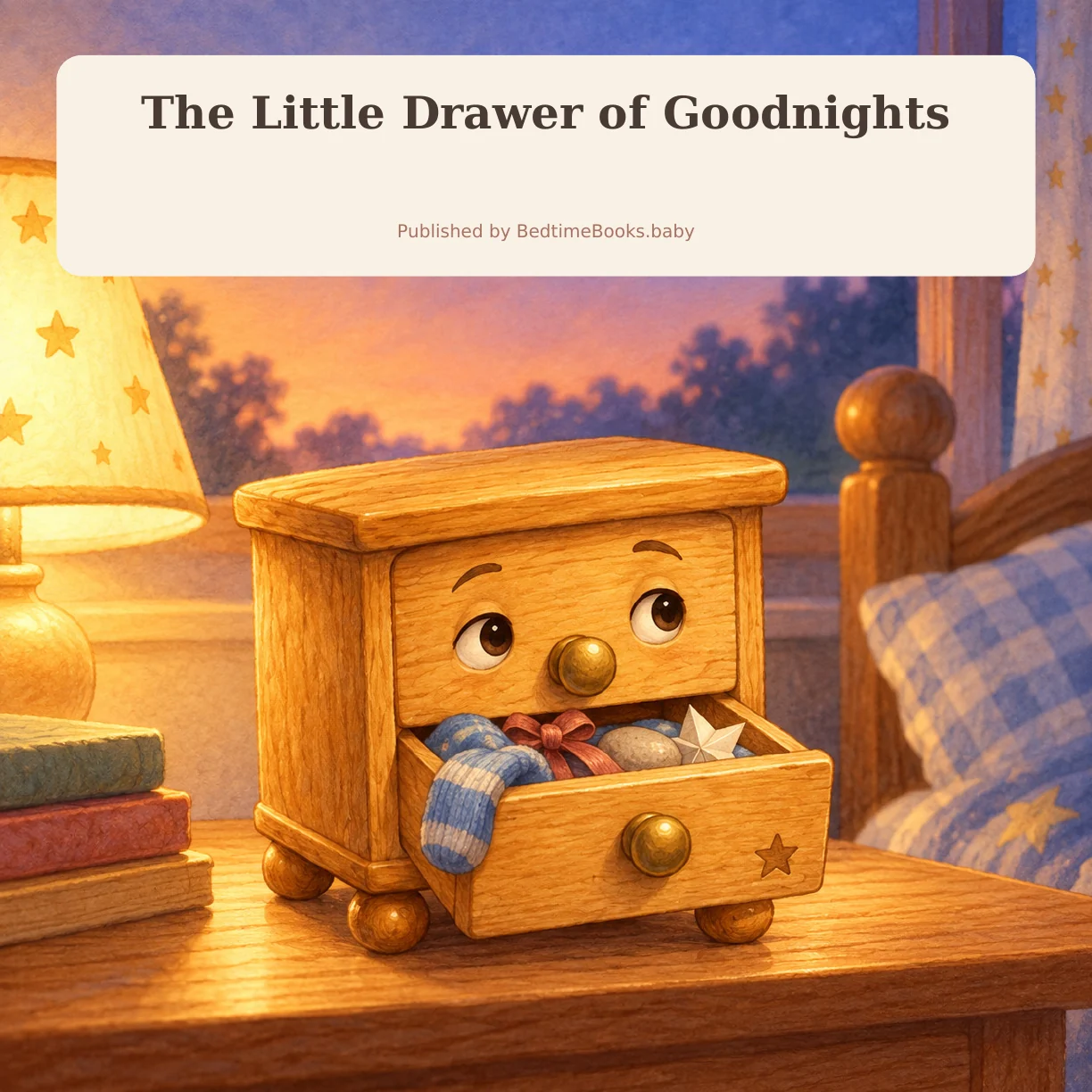
The Little Drawer of Goodnights offers a related original example: Dottie welcomes a sock, ribbon, pebble and paper star as the bedroom settles. The description establishes an object character and a sequence, but does not by itself tell you how much spoken dialogue the book contains. Inspect the preview for that.
Understand the small world
A book may let every object speak or give a voice to only one. Notice how the opening establishes the arrangement. The listener should be able to follow without an adult explaining a whole hidden society before the action begins.
Ordinary surroundings can provide orientation. A room, shelf or familiar task lets the invented element stand out. A change of scale can also be playful, provided the pictures keep the character easy to locate.
If a child asks whether the object really talks, distinguish the story from ordinary life plainly. The imaginative idea need not be corrected repeatedly, nor treated as a fact.
Listen for a distinctive voice
Dialogue should be comfortable in the adult’s own reading. You can use a small change in pace or emphasis rather than inventing a difficult voice you cannot sustain.
Look at whether several speakers remain clear from the words and pictures. A conversation that depends on an elaborate performance may be less convenient for a tired evening. That is a practical choice, not a judgement on the book’s quality.
The separate guide to using character voices explains how small distinctions can support a story without making every line theatrical.
Follow a real narrative change
An object might find a place, complete a modest task or respond to something arriving. The ending should connect with that thread. A row of cheerful objects naming themselves offers a different experience from a continuous story.
Both can be enjoyable. Choose whether you want browsing, a repeated sequence or a compact plot. Page count alone will not reveal the difference.
Dottie’s book is listed for ages 2 to 3 and approximately three minutes. Use its book page for current availability and recorded details. Do not infer extra product features or a larger story from the premise.
Let humour and wonder stay gentle
The contrast between an object’s ordinary role and its personality can create a small joke. Leave time for the child to notice it. You do not need to explain why the image is amusing or demand an answer about what other objects might say.
A listener may invent a voice or another possibility. Welcome that contribution if it fits, then return to the text when useful. Creative participation remains optional.
The imaginative bedtime stories guide compares object characters with invented places and wishes. Choose the particular voice, setting and sequence that you enjoy sharing, with room for the fiction to be playful rather than an instruction about how the child’s own room behaves.
Compare a voice with a function
An object’s ordinary role can provide a clear narrative thread. What changes when it has a viewpoint of its own? A drawer welcoming arrivals offers a different experience from a character wishing to become something else.
For the latter kind of plot, compare stories about wishes. The relationship between an object’s role and desire can supply humour or a small question without needing a large magical world.
When browsing, inspect whether the personality develops through choices and responses. A face and a name alone do not tell you what the story does. During reading, leave room for the child to enjoy the image without requiring a discussion of what objects at home might say. The invented viewpoint can simply belong to this particular book.