A story about slowing down shows a change in pace. Actions may become smaller, a task may finish or a character may begin noticing details that were previously overlooked. The most interesting examples make that change part of the narrative instead of repeatedly telling the reader to be quiet.
Follow the movement of the pages
Look at how scenes change. Does the opening contain several actions while later spreads linger on one? Do the sentences shorten, repeat or leave more room for the pictures?
These choices can create a readable transition. A slow subject alone is not enough if the story keeps introducing urgent problems.
Notice what becomes visible
Slowing down may allow a character to hear a sound, see changing light or finish an ordinary task. The new attention should give the story interest rather than merely removing action.
Invite the child to notice a detail if they wish. Avoid demanding a matching change in their own behaviour.
Preserve a natural reading voice
You can adjust pace gently without stretching every word. Very exaggerated slowness can obscure the language or become a performance of its own. Read clearly and let the book’s structure guide you.
If the child asks a lively question, answer it. The theme does not require the whole session to remain silent.
Explore a musical example
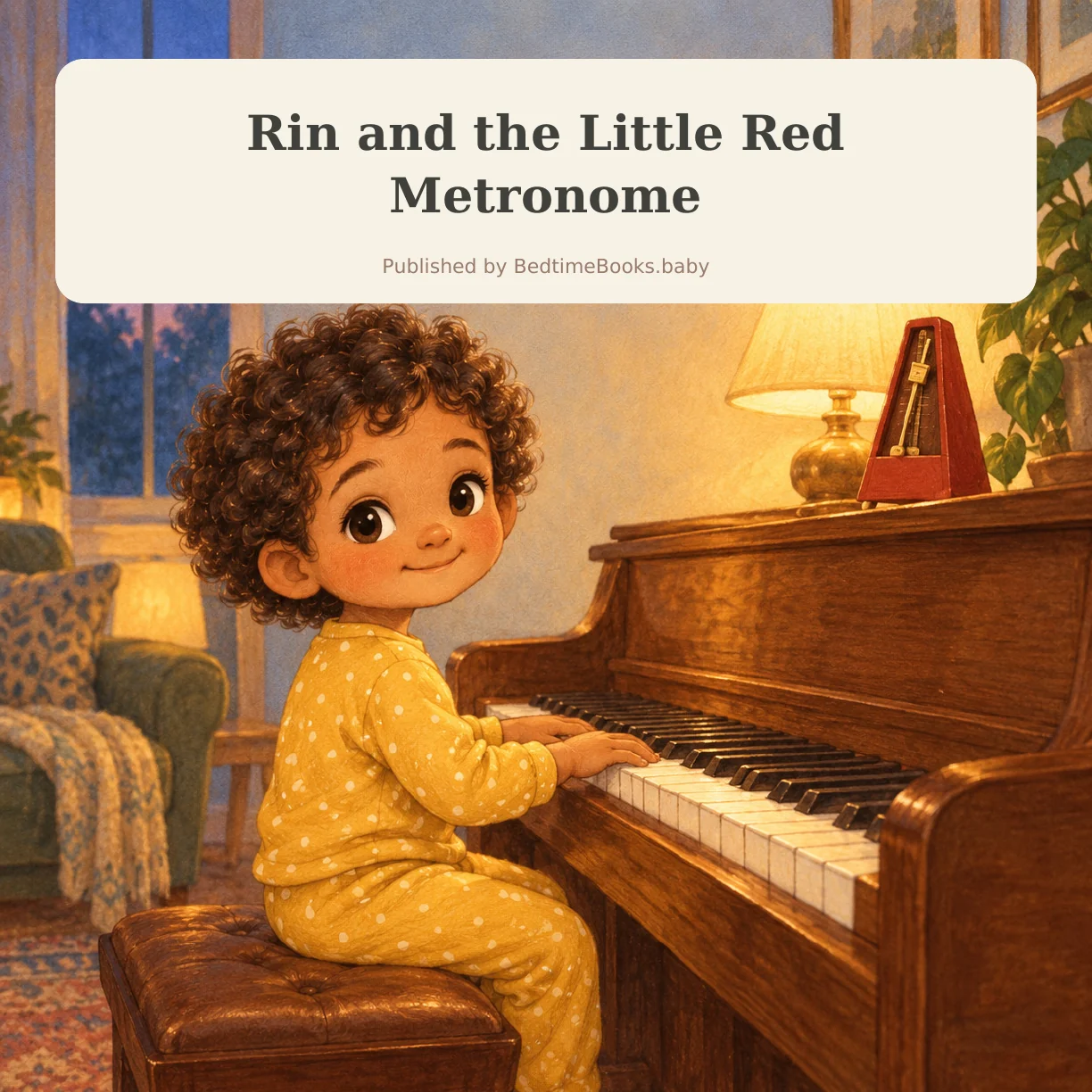
Rin and the Little Red Metronome is described as Rin finding a quiet space after her final piano note while the metronome falls still. Its recorded themes include music and rest. View its preview and age guidance rather than assuming details about the full story.
The related guide to why exciting books may fit earlier considers placement within the day without labelling energetic books as poor choices.
The calming bedtime stories guide offers other ways to assess pace and atmosphere. A slowing-down story can be enjoyed as literature without becoming a technique that promises to change a child’s state.
Compare the opening and closing actions
List mentally what the character does at the beginning and at the end. A genuine change in pace may appear through fewer actions, longer attention to one detail or the completion of a task. The illustration can show that movement without the text explicitly naming it.
If every page continues to add urgent events, a final request to slow down may not reflect the story’s actual rhythm. Read the sequence as a whole.
Avoid making the character a behaviour model
A child can enjoy watching a character settle without being required to do the same. Do not pause after the relevant page to compare the listener unfavourably with the fictional figure. The story’s transition belongs to its own world.
If the child comments that they would keep playing or working, acknowledge the alternative. You can discuss why this character stops without presenting the ending as a rule for everyone.
The adult can also model an unhurried reading by choosing a manageable amount and speaking clearly. That is different from stretching the text artificially. Keep the language intelligible and let a natural pause follow a completed thought. The book’s actual events should provide interest as the action narrows, rather than relying entirely on a slow performance.
Keep the transition connected
A satisfying slowing-down plot shows what has been completed or noticed. The character’s pause follows from the earlier activity. Read whether that connection is visible, rather than relying only on a final command to rest.
An unfinished activity can also be handled deliberately. A character may leave room for tomorrow while the story itself reaches a clear stopping point. Notice what makes that distinction understandable.
You can mention the character’s choice without applying it to the listener. A child may have another idea, and the book can allow that conversation.
The adult’s own limit belongs outside the fiction. If tonight’s reading is finished, say so plainly rather than asking the story to enforce the household boundary. Keeping those roles separate lets the book remain an enjoyable work to revisit, even when the child’s evening does not resemble its plot.