Stories about patience become interesting when something specific is being waited for and the passage of time appears on the page. Look for what the character notices, chooses or does while the situation develops. A repeated command to wait is less of a story than a visible experience of waiting.
The reason matters. Waiting for a turn, allowing a process to finish and staying with someone who needs more time create different plots. Choose the one that offers the reading experience you want.
Find what controls the wait
In some books, another character decides when an opportunity arrives. In others, an activity takes its own time. Read whether the character understands the situation and whether the book shows it clearly enough for a young listener.
A fair turn-taking sequence needs a meaningful opportunity at the end. A process-led story may instead show that something cannot be hurried without changing the result. Neither should be reduced to a general instruction that children must never question a delay.
For more about access shared between people, compare stories about taking turns. This guide focuses more broadly on how waiting becomes narrative time.
Notice what happens during the interval
A character may observe the setting, prepare something or simply remain nearby. The pictures can change subtly while the main task is paused. Look for details that make the interval worth reading rather than empty space before the reward.
The character may still feel impatient. A believable plot can include that response without treating it as a failure. Dialogue, humour or a small choice can show how the character continues.
Read the language aloud. A repeated sentence may give the book a comfortable rhythm, but a cumulative list may become much longer than expected. Inspect the final version before choosing it for a brief evening.
Compare two original settings
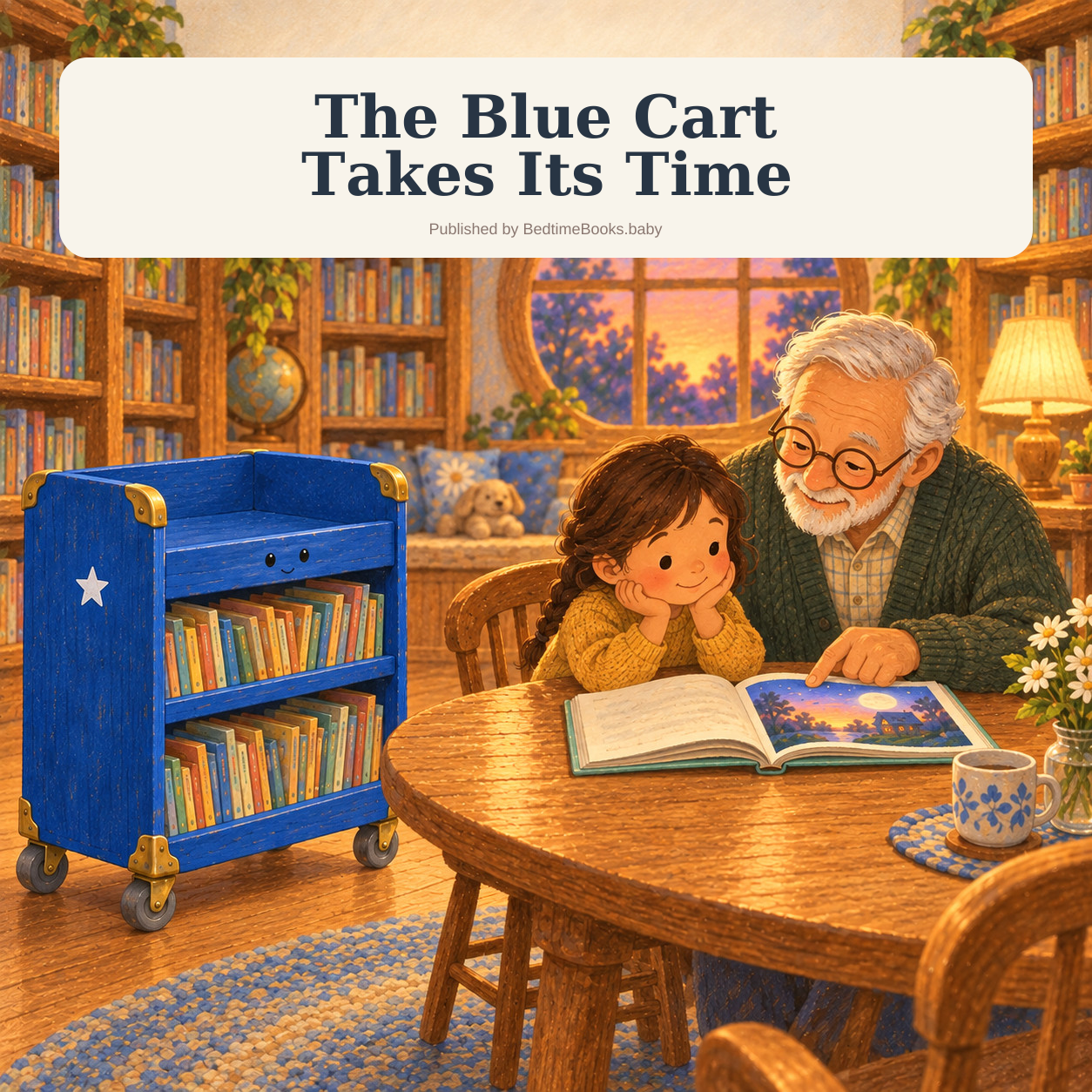
The Blue Cart Takes Its Time follows Caro, a library cart, waiting while a child and grandfather reach the last page of a picture book. Its description connects patience with allowing someone else to finish a shared experience.
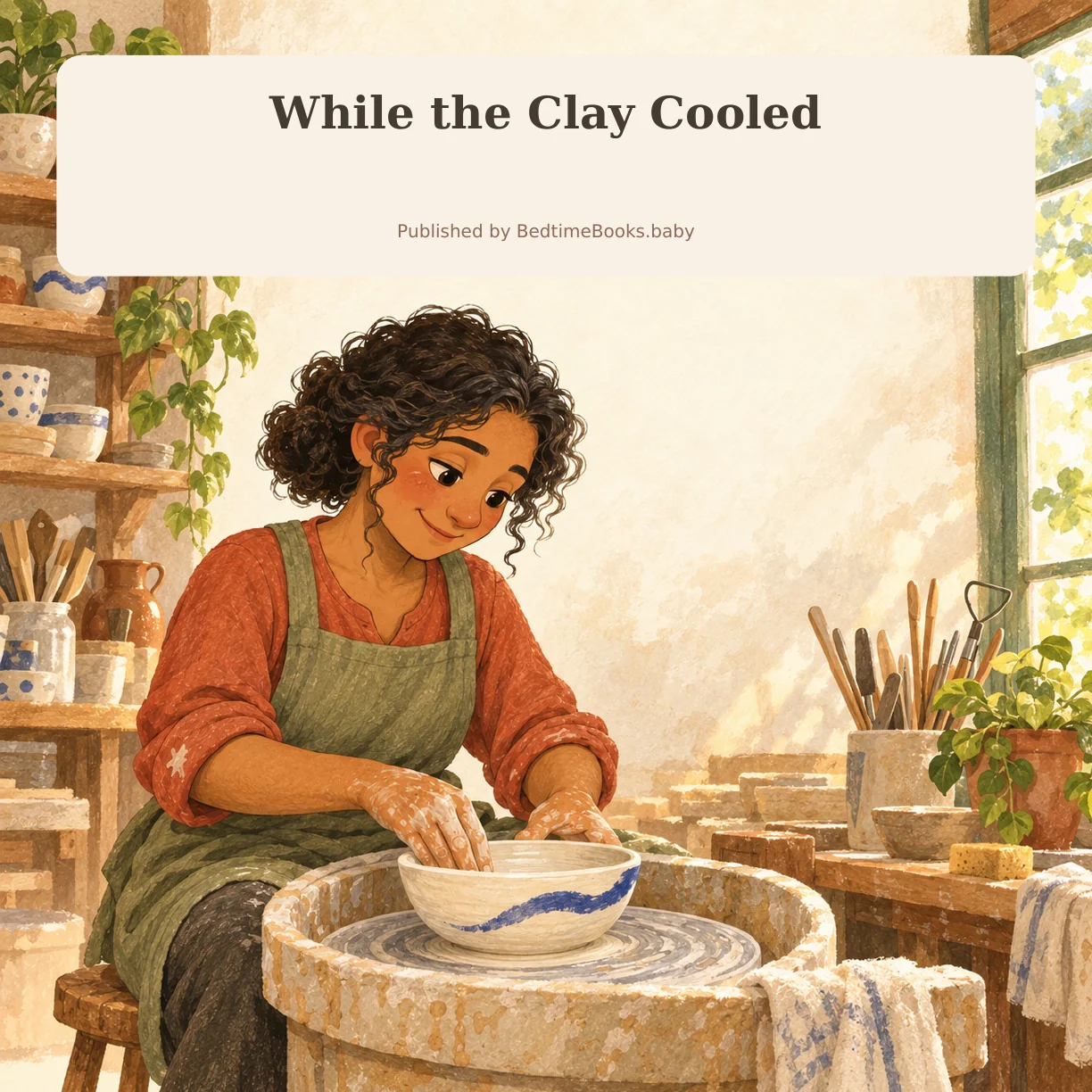
While the Clay Cooled concerns Mara shaping a bowl and adding a blue curve before waiting while a kiln cools. That is a different kind of interval, linked to an activity rather than another reader’s pace.
Check the individual previews, age guidance and approximate duration. The book pages handle current availability. These examples should not be turned into instructions about real equipment or assumptions about unseen events.
Let the listener enjoy the time
A child may want to stay with a repeated picture or move quickly to the result. You can follow that preference when the book’s structure allows it. The patience theme does not oblige the reading itself to become unusually slow.
Keep a natural pace and allow the pictures to be seen. If a question arises, answer the part needed to continue. There is no requirement to demonstrate waiting silently before turning a page.
The related guide to big days and quiet evenings considers another way changing activity can shape a story without an explicit lesson.
Look for an ending that honours the wait
The conclusion should connect with what was awaited. A task may finish, a person may complete something or a character may choose to return later. A large unrelated prize can change the story into a transaction rather than a reading of time and attention.
Ask what became possible, if the child wants to discuss it. Acknowledge a different interpretation rather than using the book to judge how patiently the listener behaved that day.
Our feelings and everyday experiences guide gathers themes for meaningful reading and optional conversation. A patience story can be enjoyed for its particular place, rhythm and characters, without a promise that hearing it will make real waiting easy.
Check whether time is visible
A picture sequence may show changing light, an object gradually taking shape or another person’s activity reaching completion. These details help make waiting part of the narrative rather than an unexplained gap.
Compare the first and last views of the same place. What is different, and does the character notice it? A small visual return can give the interval a shape without requiring a stated lesson.
If the story offers only a delayed reward, consider whether its language or pictures provide enough interest during the wait. Some books are deliberately simple; others develop attention or a relationship. Choose the experience that appeals to your reader. The adult need not slow the performance excessively to demonstrate patience. Clear phrasing and time to see the images can preserve the book’s own sense of duration.