A bedtime story about missing someone should make the absence understandable without asking the child to explain a personal loss. Look for who is away, what the character misses and how the story handles the distance. A temporary visit, a move and a death are different situations; a general label about missing someone does not tell you which one the book explores.
Choose the whole emotional journey, not only a reassuring final image. These books can offer something to read and discuss together. They do not promise to remove sadness or make a real separation easier.
Establish what the story means by absence
Read the opening carefully. Does the character know where the other person is? Is a return expected, uncertain or impossible? Ambiguous wording may be intentional, but can also require more explanation than you want during an unfamiliar bedtime reading.
Check whether the illustrations provide information the words leave out. An empty chair, a packed bag or a distant home may shape the meaning. Do not assume a cheerful cover indicates a temporary absence.
If you want a specific kind of story, inspect a complete copy or ask a librarian about the actual situation. Avoid offering a book about bereavement when you intended a simple story about a relative living elsewhere.
Look at the character’s ordinary day
A convincing story may show absence through a small detail: an activity feels different, an object recalls someone or a familiar greeting has changed. Specific scenes can be more interesting than repeated declarations of sadness.
Notice whether the character still has other interests and relationships. A story can allow missing someone to remain present while an ordinary activity continues. It need not end by declaring the feeling gone.
This makes room for a nuanced ending. A small connection or a meaningful gesture may complete the narrative without resolving every part of the character’s situation. Read what the ending actually promises.
Share a connection story accurately
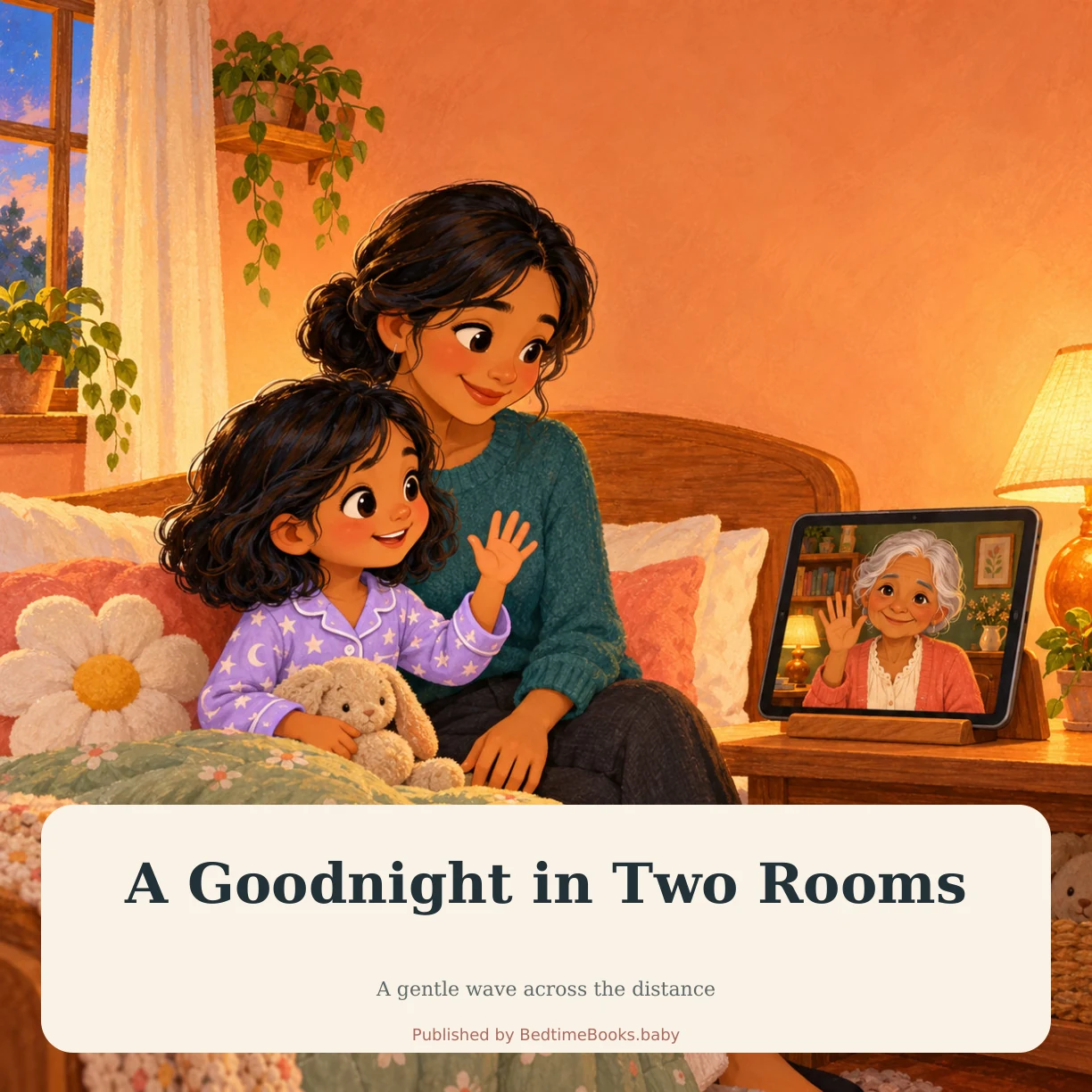
A Goodnight in Two Rooms follows Leena and Grandma sharing a bedtime wave during a call, then Leena carrying the gesture into a final whispered goodnight. It is a related example of connection across rooms, not a verified bereavement story. Its listed audience is ages 2 to 5, with an approximate three-minute reading time.
View the opening preview and use the book page for availability. Do not infer the reason for the distance or a larger family history from the brief description. That distinction helps you choose a particular story rather than attach every kind of absence to one title.
Keep questions close to the page
You might ask what the character notices after the call, visit or departure. Another option is a simple observation about the picture. Leave room for the child to listen without replying.
Avoid beginning with whom the child misses or requiring a personal comparison after every scene. If a connection is volunteered, listen without making the fictional resolution a promise about real life. A character’s reunion does not establish when someone in the child’s life will return.
For ways to keep the conversation optional, see talking about characters’ feelings. You can also read without discussion and return to a question another day.
Choose the reading occasion
A book with a sustained search, an unexplained disappearance or an intense final revelation may deserve a first reading when there is more time. Moving it earlier preserves room for questions without presenting the theme as unsuitable in general.
Keep a familiar alternative available. If the child does not want to continue, close the book without insisting that the ending will make everything better.
Our guide to feelings in bedtime stories compares absence with other everyday themes. Select a story for the particular relationship, language and pictures it offers. The aim is an enjoyable or meaningful shared reading, with the child’s own response left open.
Compare what a connection changes
In one story, a message may confirm when a visit will happen. In another, a familiar object may simply remind the character of someone. The first provides information; the second offers a moment of recognition without changing the practical distance. Read which kind of resolution the book actually establishes.
That distinction is useful when choosing for a particular evening. A listener expecting a reunion may be surprised by a more open ending, while another reader may enjoy the quieter connection. Neither response needs to be corrected.
You can describe the ending accurately to yourself before offering the book. Keep the character’s circumstances specific and resist filling gaps with the outcome you would prefer. A small fictional gesture can be meaningful without becoming a promise about a real person returning.