A little adventure gives a character a modest goal and something to discover along the way. It may involve crossing a small space, delivering an object or exploring one unfamiliar corner. The scale comes from the character’s viewpoint, not simply the distance shown on a map.
For bedtime, look for a route you can follow, manageable uncertainty and an ending that completes the original purpose. A short book can still contain intense danger, so inspect the actual events.
Identify what the character wants
A clear goal makes a small plot satisfying. The opening can show a destination, a question or a task. The reader should understand why the next step matters without a large background explanation.
Look at the illustrations for the same thread. A recurring object or landmark can connect the spreads and make progress visible. A small cast leaves more room to attend to the journey itself.
An adventure does not need to become larger at every turn. One carefully developed obstacle can be enough when it changes how the character proceeds.
Read at the character’s scale
Something ordinary to an adult can become significant from a small creature’s viewpoint. The artwork may make a gap, a leaf or a doorway feel like a major part of the landscape.
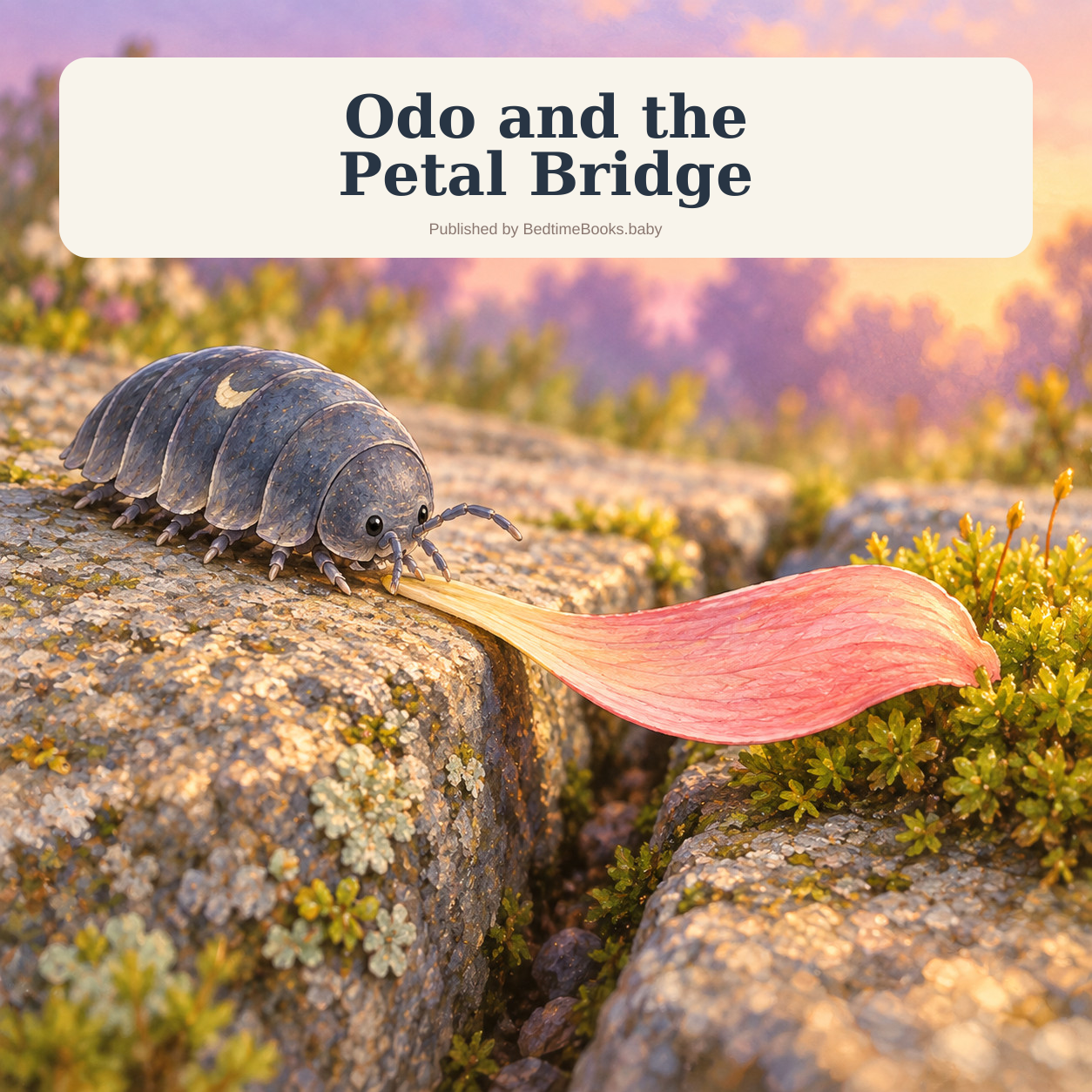
Odo and the Petal Bridge follows a woodlouse using a peach-pink petal to cross a narrow seam between stones and reach moss. Its recorded audience is ages 2 to 5, with an approximate three-minute reading time.
The premise provides a precise small nature adventure. View the preview and use the product page for current availability. Do not add a rescue, a dangerous fall or a friendship plot that the description does not establish.
Distinguish a practical obstacle from a threat
A character may need a new method or another route. That creates a different experience from an urgent escape. Ask what happens if the character pauses or does not succeed immediately.
The answer helps you judge the plot’s pressure. Disappointment, a delayed task and danger have different emotional demands even when the book uses similar action words.
The guide to how much excitement suits a bedtime story offers a broader way to compare stakes, delivery and stopping points. No category can predict every child’s response.
Check where each scene leads
A small journey should remain readable across page turns. If the character’s location changes, look for a clear transition. Repeated adult reconstruction may suggest another book would fit a brief evening more comfortably.
You can pause over an interesting illustration without turning it into a test of the route. A child may want to inspect an object rather than explain where the character goes next. Both are ways of sharing the page.
For a first reading, a complete copy is preferable to relying solely on the cover. An opening preview may not reveal a tense middle or an abrupt final surprise.
Look for a proportionate ending
The conclusion should answer the modest goal. Reaching a place, completing a task or discovering another way can be enough. A large unrelated prize may change the scale without adding much to the story.
The child might imagine another solution. You can consider it within the fiction while keeping the printed version clear. There is no need to require a new adventure as an extension activity.
Our guide to imaginative bedtime stories connects small adventures with places, objects and wishes. Choose a particular journey because its details are worth revisiting, without assuming that adventure must mean danger or that a tiny character automatically makes a quiet book.
Notice the character’s method
A modest obstacle can be interesting through how the character responds. They may look closely, use an available object or choose a slightly different route. Read whether that method is visible in the pictures and connects with what was established earlier.
An abrupt solution from outside the scene may resolve the difficulty while giving the central character little to do. Another book may make observation itself the important action. Compare those actual approaches rather than ranking the size of the challenge.
The child can suggest another method without needing to design a whole new story. Keep any extension clearly separate from the printed events. On another evening, they may want the original solution exactly as remembered. The small adventure can remain familiar while its particular details continue to offer something worth seeing and hearing.