A good story about disappointment lets the reader understand what the character wanted before the plan changes. Look for a specific wish, a believable response and an ending connected with what happened. The character need not become cheerful immediately for the story to feel complete.
At bedtime, a modest situation may offer enough interest: an unfinished activity, a changed outing or a result unlike the one imagined. Inspect the actual events rather than choosing a book solely because its description names the feeling.
Give the original wish some weight
The opening should show why the plan matters. A character who has prepared, waited or imagined something gives the reader a reason to care. Pictures can establish that investment through objects and actions without a long explanation.
Notice whether the book respects the wish after things change. A story that immediately declares the desired thing unimportant may miss what made the situation meaningful. A more interesting plot can acknowledge the loss of the plan while exploring what remains possible.
This does not require a large crisis. Precise details can make an ordinary event engaging. The reader may recognise the shape of disappointment without having experienced the same situation.
Read what happens between the change and the ending
A pause, a conversation or another attempt can give the character room to respond. Check whether the sequence feels connected. A sudden replacement reward may create a cheerful finish without addressing the story’s original thread.
Some books use humour to change the perspective. Others let a character keep part of the wish for later. Neither is automatically better; the choice depends on the particular language, pictures and listener.
Preview scenes of ridicule or pressure to stop feeling upset. The intended message may be positive while the route to it feels uncomfortable. A first reading earlier can leave more room to notice that difference.
An unfinished picture as a related example
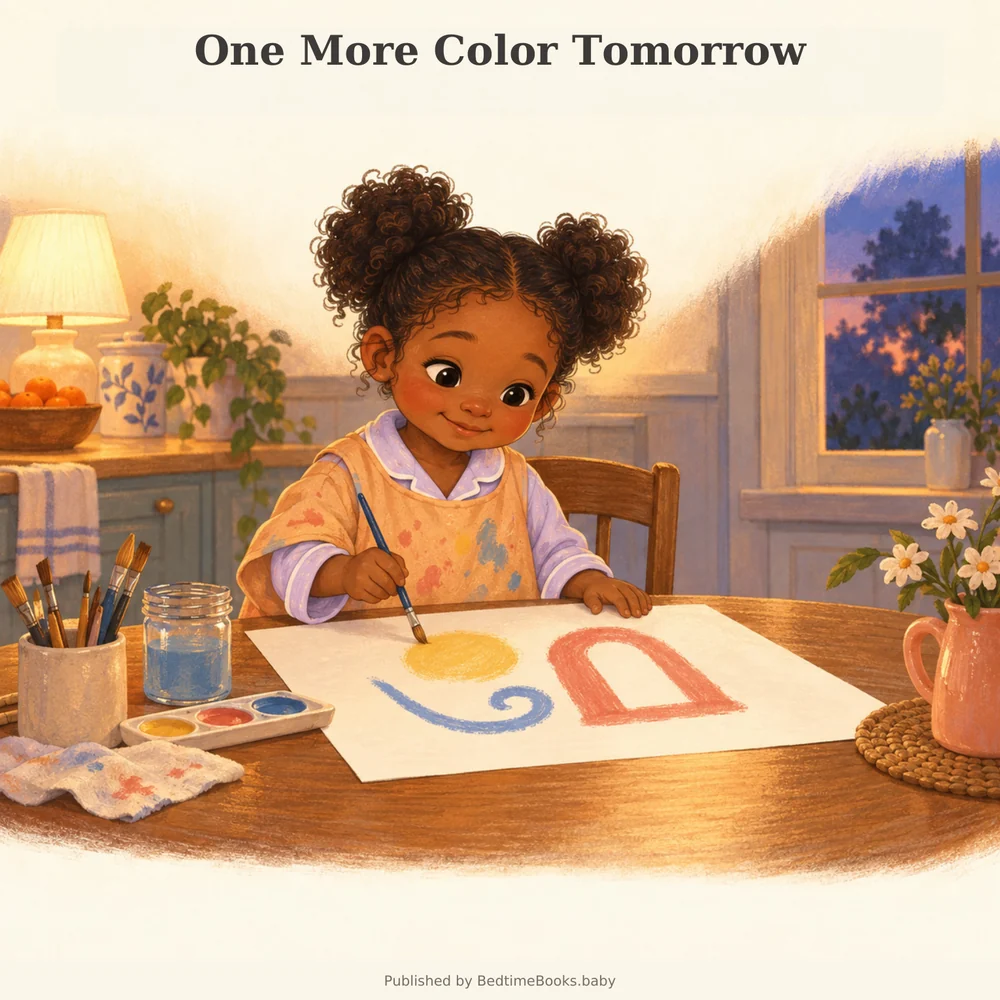
One More Color Tomorrow concerns Nia, who has another colour in mind for her picture when bedtime arrives. Its description gives a concrete example of an activity paused before the character’s own imagined finish. It is listed for ages 3 to 4 with an approximate five-minute reading time.
The preview can help you assess its artwork and opening language. Use the book page for current availability. Do not infer an argument, a reward or an emotional transformation from the short description.
The title may be useful to compare with another book about a plan that changes completely. One leaves something for tomorrow; the other may require accepting an outcome that cannot be postponed. Those are different narrative experiences.
Talk about what changed
A simple question such as what the character hoped would happen keeps the conversation close to the page. You could also notice that an object remains unfinished in the picture. Let the child respond or continue listening.
If the child suggests another ending, consider it within the story. They may think of a practical option the character did not choose. There is no need to establish that the printed solution is the only mature response.
The guide to characters’ feelings in conversation offers ways to follow these observations without asking for a personal account. A child can enjoy the book without discussing a disappointing event from their own day.
Compare resolution and replacement
| Ending choice | What to inspect |
|---|---|
| Saving part for later | The pause connects clearly with the original activity |
| Choosing another plan | The new option follows from the character’s experience |
| Receiving a surprise | The surprise does not simply erase everything that mattered |
Use the comparison when browsing rather than as a lesson for the listener. A thoughtful ending can leave a mixed feeling visible while completing the narrative.
Our guide to feelings in bedtime books compares disappointment with patience, pride and first attempts. Choose a book whose characters remain interesting beyond its message. The reading can offer company and a subject to discuss, with no promise that it will resolve a child’s real disappointment.
Read the object after the plan changes
An illustration may show the prepared materials, an unused ticket or a half-finished activity after the character learns the plan is different. Notice whether the object remains part of the story. It can preserve what mattered without a long speech about feelings.
If the ending transforms or puts away that object, compare it with the opening. The visual connection may explain the conclusion more clearly than a general happy sentence.
You do not need to point out the device as a lesson. Let the child see the spread and respond if interested. This is useful adult previewing that can stay behind a straightforward reading. A book becomes distinctive through the particular thing lost, delayed or changed, rather than being interchangeable with every other story labelled disappointment.