Animal bedtime stories for toddlers work well when the characters’ actions are easy to see and the story has a manageable shape. A favourite animal can invite interest, but look beyond the species. A gentle cover may conceal a chase, a separation or a complicated adventure.
Decide what kind of animal story you want
Some books show animals behaving broadly like animals. Others dress them, give them human homes or place them in imaginary situations. Both can be enjoyable. Keep imaginative details separate from factual explanations if the child asks about real animals.
For a younger listener, a small cast helps. Several similar-looking animals with different names can be difficult to follow, especially when the pictures do not make their roles obvious.
Inspect pictures and sound opportunities
Clear silhouettes and visible expressions can make the action readable. Check crowded scenes at the size you will actually share them. A picture that looks attractive online may have details too small for comfortable joint browsing.
Animal sounds are optional. Use one or two if the child enjoys them, without feeling obliged to produce a loud performance for every creature. A quiet narrative can become very lively through delivery.
Consider the ending
Read how the story’s uncertainty resolves. Does everyone return safely? Does the final spread introduce another danger or a noisy joke? Choose according to your child rather than assuming all animal stories are reassuring.
Gentle stories without frightening scenes offers a more detailed screening approach. You can try an unfamiliar story earlier in the day before placing it in an evening routine.
Explore a documented example
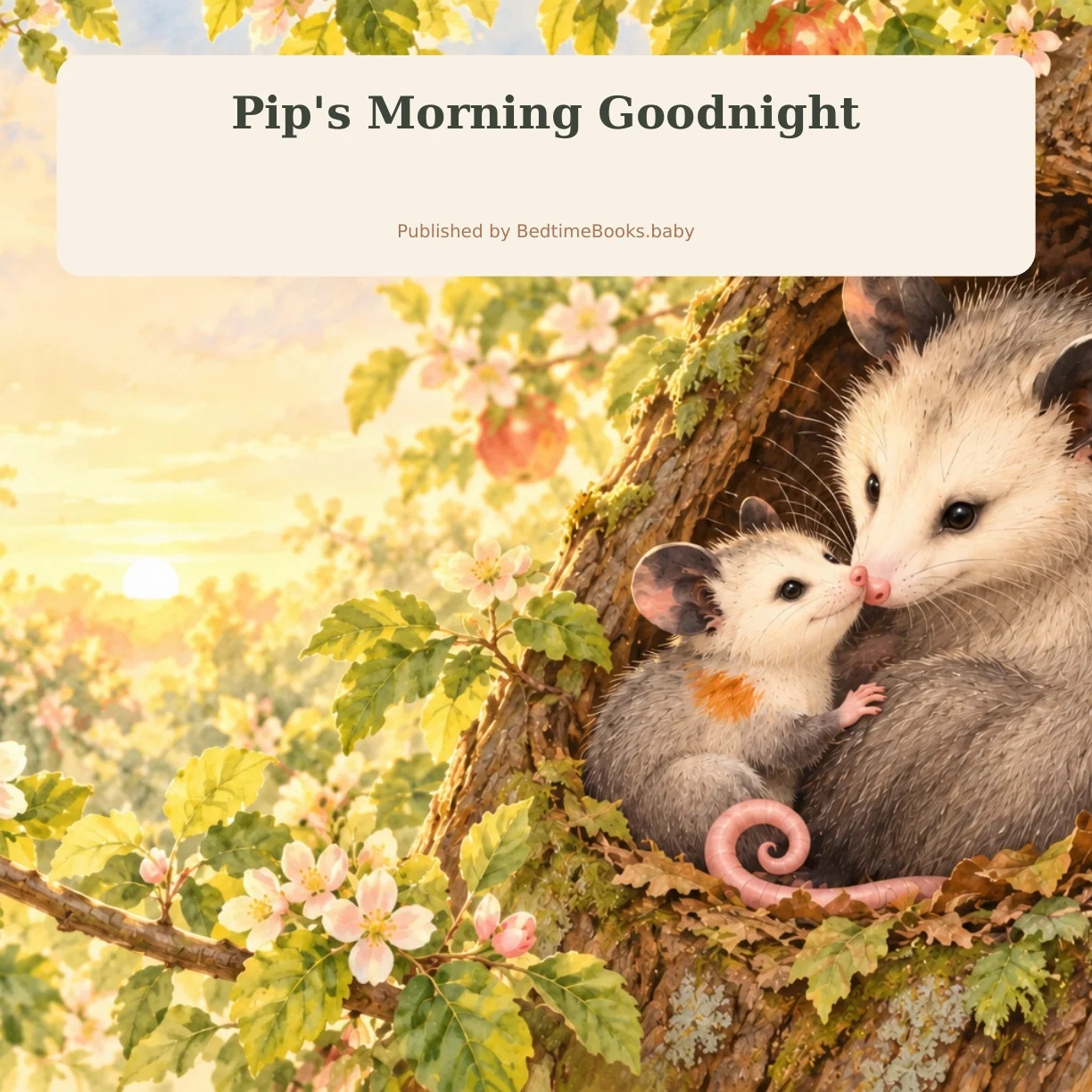
Pip’s Morning Goodnight is listed for ages 2 to 3 with an approximate three-minute reading time. Its description follows a possum returning to a family tree hollow at dawn after being awake at night. That makes it an example of an animal story whose goodnight happens in the morning.
Use the opening preview to assess the language and pictures. Do not extend that brief description into claims about unseen events. The toddler bedtime reading guide helps compare this type of story with routines, repetition and other interests.
Compare two versions of the interest
If the child likes a particular animal, look for two distinct story forms rather than two nearly identical covers. One might follow a small task; another might explore a relationship. Inspect actual previews to verify the difference.
This preserves a familiar point of interest while varying the reading experience. It also helps you see whether the appeal lies in the animal itself, a repeated sound or the way the pictures work. You do not need to ask the child to analyse that preference.
A new title can be introduced earlier, leaving the established favourite available for bedtime. Variety need not depend on persuading the child to give up the book that already feels familiar.
Use the animal interest to inspect the pictures
When browsing a candidate, find the main animal on several spreads. Is it recognisable when its position changes? Do the expressions and actions show what is happening? A character that disappears into crowded backgrounds may create a search-book experience rather than a continuous read-aloud.
Look at the other creatures too. A book can show several species without requiring the adult to supply a name for each. If the child asks, you can answer what you know and leave uncertain identification for another time. Avoid inventing a factual answer simply to keep the reading flowing.
Keep the evening reading distinct from an animal game
A favourite sound or movement can be shared once, then the story can continue. If the child wants an extended game, decide whether the moment allows it. You can enjoy the game earlier another day without suggesting that the book caused a problem.
The adult can also choose a lower-key delivery from the start. Read action words clearly rather than automatically acting them out. This preserves the story’s language while leaving room for participation that fits the evening.
Afterward, notice one concrete feature that worked: a visible route, a satisfying refrain or a small cast. Use that feature to compare the next animal book. The species may open the conversation, but the story’s construction determines much of the experience you actually share.